
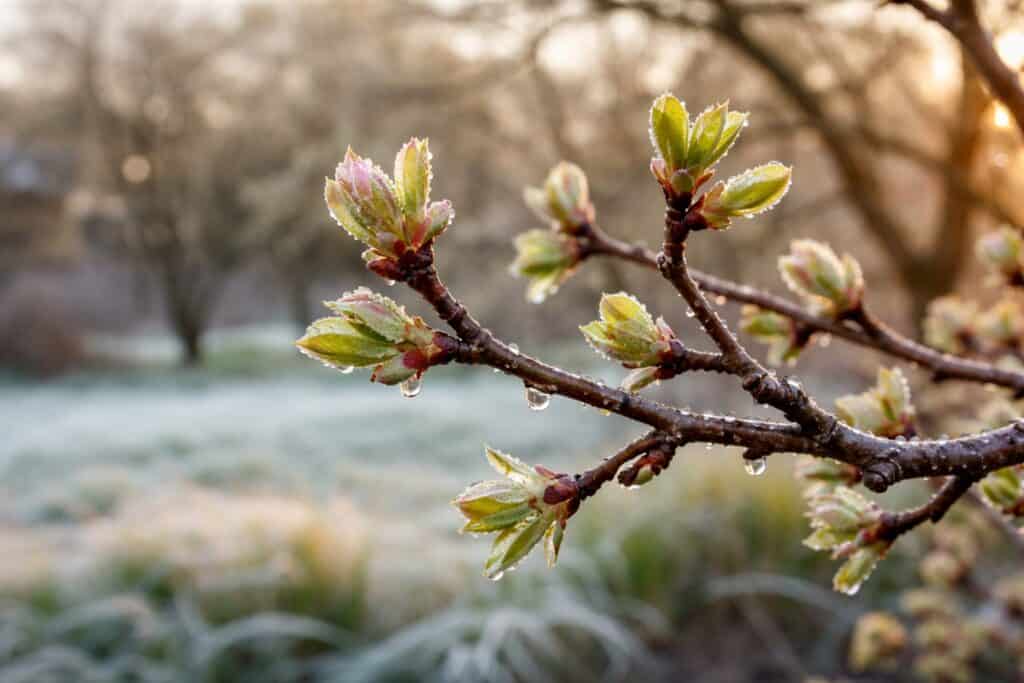
False spring in Texas is becoming increasingly common, and North Texas landscapes are feeling the effects. A sudden stretch of warm winter weather can trick trees into breaking dormancy weeks too early. Buds swell, leaves emerge, and flowering trees begin to bloom. Then, just as quickly, temperatures drop again.
This temperature whiplash leads to early bud break damage, long term stress, and increased vulnerability to tree fungus and insect pressure. For homeowners and property managers, understanding false spring Texas patterns is crucial to protecting valuable trees and maintaining resilient landscapes.
If you are unsure whether your trees are at risk, explore our professional tree care services in Tarrant County to schedule a free seasonal health assessment.
What Is False Spring in Texas?
False spring Texas events occur when late winter brings unseasonably warm temperatures that signal trees to leave their dormancy prematurely. Trees rely on accumulated chilling hours followed by gradual warming to regulate their growth cycles. When temperatures spike too early, that balance is disrupted.
When buds begin to swell and leaves emerge, trees shift energy from root storage into new growth. If a freeze follows, those tender tissues are damaged or destroyed.
Why Early Bud Break Damage Is So Serious
Early bud break damage does more than burn a few leaves. It disrupts the entire energy system of the tree.
When new growth is killed by frost:
• Stored carbohydrates are depleted prematurely
• Secondary bud growth is delayed
• Flowering and fruit production decline
• Overall canopy density may thin
• Long term structural health weakens
Mature shade trees, ornamental species, and fruit producing trees are especially susceptible. Young trees planted within the past three years face even higher risk because their root systems are still developing.
The Texas A&M Forest Service states that repeated freeze injury can reduce growth rates and increase vulnerability to secondary pests and pathogens. This makes proactive management essential for North Texas landscapes.
Which North Texas Trees Are Most Vulnerable?
Certain species commonly planted across North Texas landscapes are more prone to false spring Texas injury.
Highly susceptible trees include:
• Live oak during early flush cycles
• Red oak varieties
• Cedar elm
• Crepe myrtle
• Magnolia
• Fruit trees such as peach and plum
These species respond quickly to warming trends. When February or early March temperatures climb into the 70s or 80s, bud activity accelerates. A sudden freeze in the mid 20s can then cause widespread tissue death.
Soil Moisture Solutions Texas Property Owners Should Not Ignore
False spring Texas stress is compounded by improper soil moisture levels. Warm spells increase transpiration and root activity. If soil conditions are dry, trees become further stressed before a freeze even occurs.
Soil Moisture Solutions Texas landscapes depend on include:
Monitoring Soil Saturation
Clay heavy North Texas soils retain water unevenly. During warm winter periods, light irrigation may be necessary to maintain consistent moisture around the root zone. Overwatering, however, increases fungal risk.
Improving Soil Structure
Compacted soils restrict oxygen flow and root development. Aeration and organic matter integration improve drainage and stabilize temperature fluctuations in the root zone.
Adjusting Irrigation Schedules
Smart irrigation systems should respond to temperature changes rather than fixed calendar dates. Sudden warm spells require careful moisture monitoring.
Balanced soil moisture protects roots during temperature swings and reduces freeze shock.
The Connection Between False Spring and Tree Fungus
Tree Fungus outbreaks often follow false spring Texas events. Damaged leaf tissue and stressed vascular systems create entry points for pathogens.
Common post freeze fungal issues in North Texas include:
• Oak wilt vulnerability in weakened oaks• Anthracnose in shade trees
• Powdery mildew during humid rebounds
• Root rot in oversaturated soils
When freeze damaged tissue remains on the tree, fungal spores can colonize rapidly during subsequent warm and humid conditions.
The United States Department of Agriculture emphasizes that stressed trees are significantly more susceptible to opportunistic pathogens.
If you notice leaf spotting, canopy thinning, or branch dieback, explore our plant health care programs to prevent disease spread.
Signs Your Tree Experienced Early Bud Break Damage
Homeowners often assume trees will recover naturally. While many do, symptoms can persist for months.
Watch for these warning signs:
• Blackened or wilted new leaves
• Delayed secondary leaf emergence
• Uneven canopy density
• Excessive seed or fruit drop
• Bark splitting on young branches
In some cases, damage may not appear until summer heat intensifies stress levels. Trees that seemed fine in March may struggle in July.
Scheduling a seasonal inspection helps detect structural weakness early.
Long Term Landscape Consequences of False Spring Texas Patterns
False spring Texas cycles impact more than individual trees. Entire North Texas landscapes can suffer cumulative stress over several seasons.
How to Protect Trees Before the Next Temperature Swing
While no one can control Texas weather unfortunately, some proactive planning reduces damage.
Strengthen Root Systems Year Round
Healthy roots store more carbohydrates, allowing trees to recover faster after freeze injury. Deep root fertilization and soil balancing support stronger dormancy cycles.
Avoid Encouraging Premature Growth
Late winter nitrogen applications can stimulate tender growth. Timing nutrient treatments appropriately is essential in North Texas landscapes.
Maintain Proper Mulch Depth
Mulch moderates soil temperature and conserves moisture. Keep mulch two to three inches deep around the root zone without contacting the trunk.
Monitor Weather Closely
When extreme temperature drops are forecast, light irrigation before a freeze can sometimes stabilize soil temperatures.
Recovery Strategies After Early Bud Break Damage
If your trees have already experienced freeze injury, focus on stabilization rather than aggressive intervention.
• Allow time for secondary buds to emerge
• Maintain consistent soil moisture
• Apply balanced nutrients after new growth begins
• Monitor for fungal symptoms
• Remove severely damaged limbs only if structurally hazardous
Patience is critical. Trees often require an entire growing season to rebuild stored energy reserves.
Climate Trends and the Future of False Spring Texas Events
Climate research suggests that erratic temperature patterns may continue across the southern United States. Warmer winters combined with periodic Arctic fronts create ideal conditions for early bud break damage.
According to climate data published by NOAA, the number of frost days following early warm periods has increased in several regions of Texas.
This means property owners must adapt management strategies to account for volatility rather than relying on historical seasonal timing.
Working with experienced local professionals ensures your landscape plan reflects current climate realities. Review our commercial landscape programs to build long term resilience.
When to Schedule a Professional Tree Assessment
The best time to evaluate false spring Texas impact is within two to four weeks after a freeze event. Early diagnosis allows:
• Identification of structural weakness
• Targeted fungal prevention treatments
• Soil moisture adjustments
• Nutrient balancing plans
Trees represent one of the most valuable assets in North Texas landscapes. Protecting them from early bud break damage preserves shade, property value, and long term ecosystem stability.
If you suspect your trees woke up too early this season, schedule a comprehensive evaluation with our certified team today. A proactive approach now prevents costly complications later.
By understanding false spring Texas risks, implementing Soil Moisture Solutions Texas properties depend on, and monitoring for tree fungus threats, you can safeguard your investment through every unpredictable season.