Every spring across the Dallas-Fort Worth metroplex, homeowners and property managers start noticing a sticky residue forming on cars, patio furniture, and walkways beneath their trees. Tree leaves appear glossy, curled, or covered with clusters of tiny insects. These are early signs of one of the most predictable seasonal pest events in the region: the April aphid surge.
Aphids are among the most common insects affecting North Texas trees, and their populations can grow rapidly during the warm, early spring conditions. While small in size, aphids can create massive nuisance issues for homeowners and contribute to several secondary plant health concerns.
Understanding what causes the April aphid surge, which trees are most vulnerable, and how to identify early symptoms can help homeowners and property managers respond before their problems escalate.
For a broader overview of insect issues affecting landscapes in the region, visit our guide on Shrub & Tree Pests.
Why Aphid Populations Explode in April
North Texas weather patterns create the perfect conditions for aphid reproduction during early spring. As temperatures rise and trees begin producing new leaves, aphids suddenly gain access to abundant, soft plant tissue rich in vital nutrients.
Several environmental factors contribute to the April population spike:
- Warmer daytime temperatures that accelerate insect development
- Tender, new leaf growth on trees and shrubs
- Mild winters that allow more aphids to survive
- Reduced natural predator activity early in the season
Aphids reproduce like magic. Many species give birth to live young rather than laying eggs, allowing populations to double in just a matter of days.
A single female aphid can produce dozens of offspring, and those offspring begin reproducing within a week. This rapid lifecycle is why homeowners often notice infestations appearing almost overnight.
Research from Texas A&M AgriLife Extension explains how spring weather patterns influence aphid population cycles.
Trees and Shrubs Most Affected in North Texas
Not every plant or tree attracts aphids equally. Certain trees and shrubs commonly planted across the DFW area are particularly susceptible.
Common host trees include:
- Crepe myrtle
- Live oak
- Red oak
- Hackberry
- Pecan
- Elm
- Bradford pear
- Magnolia
Ornamental shrubs can also become hosts to aphids, especially during their early leaf development.
Shrubs that may experience infestations include:
- Wax myrtle
- Photinia
- Rose bushes
- Viburnum
- Gardenia
The vulnerability of these plants is tied to the nutritional composition of their new foliage. Aphids feed by piercing leaf tissue and extracting sap, which provides the sugars and amino acids needed for their rapid reproduction.
What Aphids Actually Do to Trees
Many homeowners worry that aphids will immediately kill their beloved trees. In most cases, healthy trees can handle moderate aphid feeding without any serious, long term damage. However, heavy infestations can create several problems.
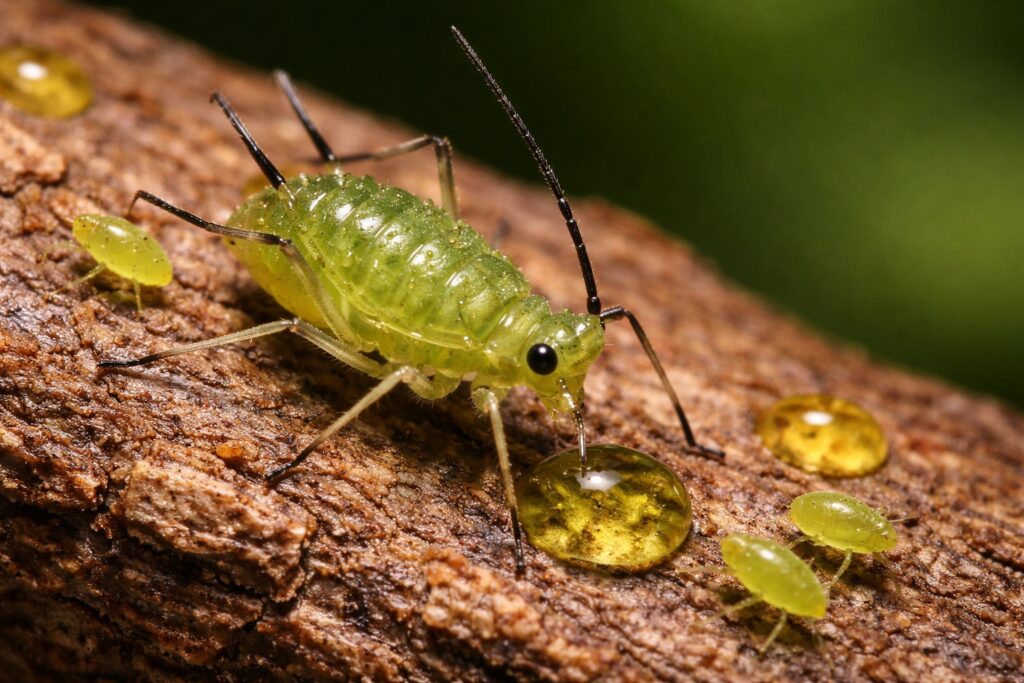
Aphids feed using needle-like mouthparts that tap into plant sap. This feeding process removes nutrients from developing leaves.
Common symptoms to look for include:
- Leaf curling or distortion
- Sticky residue on leaves and surfaces below, like cars, sidewalks, etc.
- Clusters of small insects on leaf undersides
- Yellowing foliage
- Stunted new growth
The sticky substance many homeowners notice is called honeydew. Honeydew is a sugary waste product produced as aphids consume plant sap.
Honeydew often coats leaves, vehicles, outdoor furniture, and patios beneath infested trees.
Over time this sticky residue can lead to additional plant health issues.
The Connection Between Aphids and Sooty Mold
One of the most noticeable complications of aphid infestations is the development of sooty mold.
Sooty mold is a dark fungal growth that develops on the honeydew residue that’s left behind by aphids and other sap feeding insects.
The mold itself doesn’t directly infect plant tissue. Instead, it grows on the sugary coating that accumulates on leaves and branches.
When sooty mold becomes extensive, it can reduce the amount of sunlight reaching the leaf surface. This interferes with photosynthesis and may weaken the plant’s health over time.
Homeowners interested in fungal growth patterns can review our educational guide on Texas Tree Fungus.
The University of California Integrated Pest Management program provides additional research explaining how honeydew supports fungal development.
Signs the April Aphid Surge Has Begun
Because aphids are extremely small, most homeowners notice the symptoms before they ever see the insects themselves.
Early warning signs include:
- Sticky droplets on vehicles parked beneath trees
- Leaves appearing shiny or glossy
- Ants traveling up and down tree trunks
- Leaves beginning to curl or wrinkle
- Dark mold forming on leaves later in the season
Ant activity is a particularly important indicator to keep an eye out for.
Ants are strongly attracted to the honeydew that’s produced by aphids. In fact, they often will protect aphid colonies in order to maintain this food source.
Large numbers of ants climbing up your trees can mean that aphids are already active in the tree canopy.
Why North Texas Trees Experience Recurring Aphid Cycles
Many homeowners notice that that aphid problems occur year after year on the same trees. This type of pattern is very common.
Several factors contribute to recurring infestations:
- Consistent host trees in the landscape
- Favorable climate for aphid survival
- Seasonal growth cycles of trees
- Limited predator populations in urban areas
Urban landscapes often have fewer natural insect predators than most natural ecosystems. Lady beetles, lacewings, and parasitic wasps normally help regulate aphid populations.
When predator numbers are low, aphids can multiply that much more easily.
Landscape conditions such as dense plantings or sheltered areas may also create microclimates that support pest development that will need tree and shrub care.
The Role of Natural Predators
Not all insects in your landscape are harmful. Many beneficial insects actively feed on aphids and help regulate outbreaks.
Common aphid predators include:
- Lady beetles
- Green lacewings
- Hoverflies
- Parasitic wasps
A single lady beetle larva can consume hundreds of aphids during its development.
These natural predators often arrive after aphid populations begin expanding, which is why infestations may peak before declining later in spring.
When Aphid Activity Becomes a Problem
While small numbers of aphids are normal in most landscapes, large infestations can create nuisance conditions for homeowners, and may require a visit from a professional pest control company.
Problems typically arise when:
- Honeydew accumulates on vehicles and surfaces
- Sooty mold begins covering leaves
- New growth becomes heavily distorted
- Large ant populations develop around trees
In some cases, the excessive feeding on young leaves may slow plant growth or reduce appearance during the spring season.
Early monitoring is the best way to identify increasing populations.
Seasonal Timing of the Aphid Surge
Across North Texas, aphid activity typically follows a predictable seasonal pattern.
- In early March, trees and shrubs begin leaf emergence and aphids become active.
- In late March to April, the populations expand rapidly as temperatures warm and new foliage develops.
- In late April to May, predator insects begin catching up with aphid populations.
- In early Summer, many aphid populations decline naturally as the temperatures become steadily hotter.
Some species, however, may continue reproducing on certain host plants throughout the summer season.
Monitoring Trees During Spring
Regular observation of your landscape plants during early spring helps identify aphid activity before populations become overwhelming.
Homeowners can monitor trees by:
- Checking the underside of leaves
- Looking for clusters of small insects
- Watching for sticky residue on surfaces
- Observing for increased ant activity
Monitoring also helps detect other pest or fungal concerns early.
For additional information about insect activity affecting North Texas landscapes, explore our Shrub & Tree Pests guide.
Environmental Conditions That Increase Aphid Pressure
Several environmental factors can intensify aphid outbreaks in your yard.
These factors include:
- Extended mild winters
- Rapid, spring warm-ups
- Excess nitrogen fertilization
- Dense canopy growth
High nitrogen levels in plant tissue make the leaves more nutritious for sap feeding insects, which can accelerate aphid reproduction.
Balanced soil conditions play an important role in maintaining plant health without encouraging pest outbreaks.
Protecting Your Trees From Spring Aphid Surges
For homeowners and property managers across the Dallas-Fort Worth region, the arrival of aphids each April is almost as predictable as the arrival of spring itself. Although these insects are small, their rapid reproduction and mighty honeydew production can create noticeable nuisance conditions in residential and commercial landscapes.
Recognizing early warning signs like sticky residue, leaf distortion, and increased ant activity allows homeowners to respond before aphid populations spread throughout the canopy and onto other trees.
Trees Hurt Too provides professional tree health evaluations and targeted tree pest management for homeowners across North Texas. Our team focuses on identifying insect pressure early, monitoring canopy health, and applying science-based pest control strategies designed specifically for North Texas trees.
If your trees are showing signs of sticky honeydew, leaf curling, or heavy insect activity this spring, a professional tree health assessment can help prevent minor pest activity from becoming a larger tree health concern.
Schedule a tree health inspection with Trees Hurt Too to identify aphid activity early and keep your North Texas trees healthy throughout the growing season.