
What is Oak Wilt?
Oak wilt is a vascular fungal disease caused by Bretziella fagacearum. The fungus invades the water-conducting tissues of oak trees, blocking the flow of water and nutrients. This internal clogging causes leaves to wilt, brown, and drop far earlier than normal. Once established, oak wilt spreads rapidly both above ground and underground:- Above Ground: Sap-feeding beetles carry spores from diseased trees to fresh pruning wounds or injuries on healthy oaks.
- Underground: In live oak communities, interconnected root systems allow the fungus to move laterally, infecting entire clusters of trees.
For a full scientific breakdown, see Texas A&M’s Oak Wilt Guidance.
Early Symptoms of Oak Wilt
The sooner oak wilt is detected, the greater the chance of saving valuable trees and protecting neighboring oaks. Unlike some fungal issues that progress slowly, oak wilt symptoms often appear suddenly and worsen rapidly. Recognizing the unique patterns of this disease helps homeowners distinguish it from ordinary stress or nutrient problems.Veinal Necrosis: The Most Telltale Sign
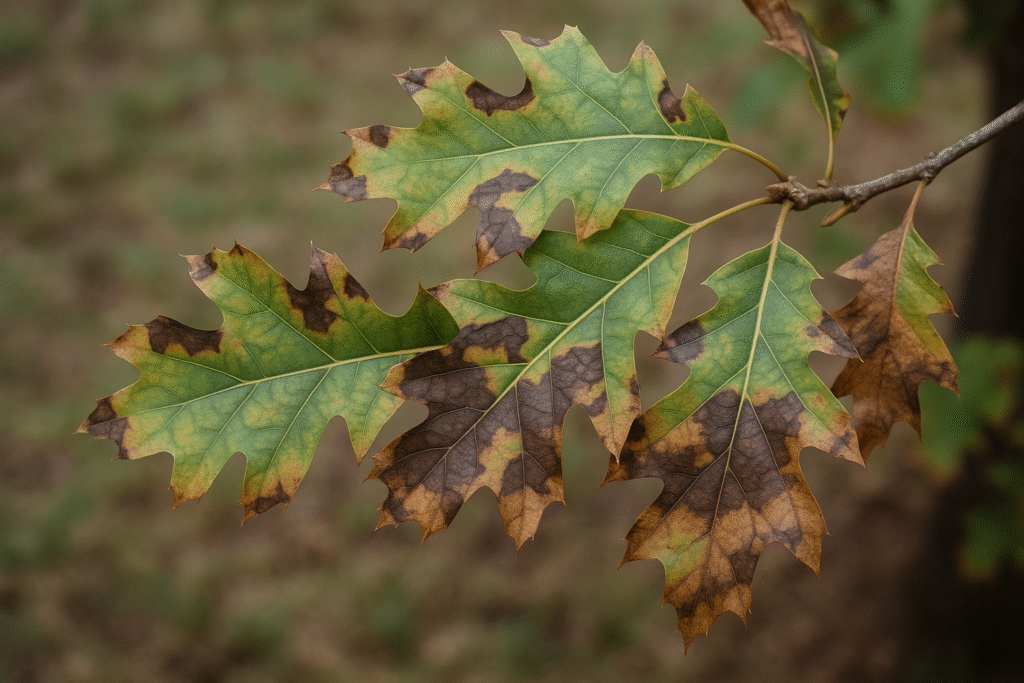
The hallmark symptom of oak wilt is veinal necrosis, leaves begin to brown along the veins while the surrounding tissue stays green or yellow. This creates a distinct two-tone appearance that is different from drought stress, which usually causes uniform browning from the leaf edges inward. Nutrient deficiencies also tend to create an even yellowing pattern, not the sharp vein-centered discoloration seen with oak wilt. If you notice leaves with brown veins but otherwise green surfaces, it’s a strong warning sign. These are often the first indicators described in our North Texas Tree Disease Identification Guide.Sudden Leaf Drop
Another red flag is premature leaf drop. Healthy oaks should retain their leaves through the growing season, but trees infected with oak wilt may shed leaves as early as spring or mid-summer. The fallen leaves usually show the same two-tone pattern: green or yellow tissue surrounding brown veins. This “half-green, half-brown” symptom is a quick way for homeowners to differentiate oak wilt from normal seasonal shedding.Canopy Thinning
As the disease advances, the canopy begins to thin, first at the top of the tree. Branches die back from the crown downward, creating a “stag-headed” look with bare upper limbs and thinning foliage below. This progression is especially common in live oaks, where the decline can spread from one tree to many through shared root systems.Additional Subtle Symptoms to Watch For
- Wilting During Adequate Moisture: If an oak appears wilted despite recent rainfall or watering, oak wilt may be disrupting water movement inside the tree.
- Patchy Decline: Some sections of the canopy may die suddenly while others appear healthy, creating an uneven appearance.
- Rapid Timeline: Symptoms can escalate from mild leaf discoloration to large-scale canopy loss in just weeks, particularly in red oaks.
How Oak Wilt Spreads
Oak wilt is particularly dangerous because it spreads quickly both above ground and underground, making entire neighborhoods of oaks vulnerable once a single tree is infected.Insect Transmission
- The primary insect vectors are sap-feeding beetles (nitidulids), which are strongly attracted to fresh wounds or pruning cuts on oak trees.
- When these beetles feed on the sap of an infected oak, fungal spores stick to their bodies. They then carry the spores to new wounds on nearby healthy oaks, introducing the fungus directly into the tree’s vascular system.
- This is why even small cuts or storm damage can serve as gateways for oak wilt if left unsealed.
Root Grafts
- Live oaks are especially prone to oak wilt because of their interconnected root systems. Their roots naturally graft together, forming living pathways between trees.
- Once one tree is infected, the fungus moves underground through these grafts, spreading silently and quickly to neighboring oaks.
- This is why entire groves of live oaks often decline together, one infection becomes a community-wide problem.
Prevention and Management
Since there is no permanent cure for oak wilt once it’s well established, prevention and early action are the best defenses.Avoid Pruning During High-Risk Season
- Never prune oaks between February and June, when beetle activity is highest and fungal mats are producing spores.
- If pruning is unavoidable, seal every wound immediately with a latex-based wound dressing or pruning paint to block insect access.
- Always disinfect pruning tools with alcohol or bleach between trees to avoid carrying spores yourself.
Professional Tree Injections
- Preventive fungicide injections (propiconazole) can protect healthy trees or halt infections in very early stages.
- These injections are administered directly into the vascular system, protecting the tree from within.
- They are especially recommended for high-value trees in oak wilt-prone areas.
- Learn more about Tree Injections as both a preventive and corrective solution.
Root Barriers and Trenching
- In live oak communities, root graft transmission is the leading cause of spread.
- Professional arborists can create trenching barriers between trees, severing root grafts and containing the disease.
- This approach is most effective when combined with injections for trees on the “healthy” side of the trench.
Soil and Water Management
- While not a cure for oak wilt, maintaining good soil drainage and reducing stress strengthens a tree’s defenses.
- Poorly drained soils increase the risk of secondary infections like Root Rot, which can accelerate decline.
- Practices such as Moisture Management and Deep Root Feeding keep trees resilient.
Why Professional Help Matters
Managing oak wilt requires specialized knowledge, tools, and timing. A certified arborist can determine whether trenching, injections, or removal is necessary and develop a plan that protects both your property and the broader community.Why Early Detection Matters
Oak wilt is one of the few tree diseases that can devastate entire neighborhoods in a matter of months. Once advanced symptoms take hold, options for saving affected trees are limited, and removal often becomes the only solution. The consequences extend beyond losing a single oak:- Loss of Property Value: Mature oaks add significant curb appeal and can increase home values by up to 15%. Losing them diminishes resale potential.
- Shade Benefits Disappear: Oaks provide natural cooling for homes and landscapes, reducing energy costs in the extreme North Texas heat.
- Neighborhood Aesthetics: When multiple oaks in a community decline, streetscapes lose their character and beauty.
- Environmental Impact: Large oak trees are critical habitats for birds, pollinators, and small mammals. Their decline disrupts local ecosystems.
FAQs About Oak Wilt in North Texas
How fast does oak wilt kill a tree?- In red oaks, the disease progresses extremely quickly, trees often die within just a few weeks.
- In live oaks, decline may take several months, but because of interconnected roots, entire groves can be lost at once.
- No. Oak wilt only infects oak species. However, other tree diseases such as Hypoxylon Canker and Root Rot may cause similar symptoms, which is why accurate identification is so important.
- Yes. Preventive measures like Tree Injections, careful pruning practices, and seasonal timing greatly reduce risk.
- Avoid pruning between February and June when beetle activity is highest.
- Reducing pest populations is equally important; borers, aphids, and scales often worsen fungal issues. Learn more in our guide: How Tree Pests Spread Fungal Diseases.
- Notify them immediately and contact a professional arborist. Prompt root trenching and injections may save surrounding trees from infection.
Protecting Your Oak Trees
Oak wilt is a serious and fast-moving threat, but it doesn’t have to devastate your landscape. With vigilance, preventive care, and timely intervention, many trees can be saved before the disease spreads. At Trees Hurt Too Inc., we specialize in protecting oaks across North Texas with comprehensive services that combine science-driven treatments and practical field experience. Our certified arborists focus on both immediate disease control and long-term tree and shrub care to ensure your landscape thrives for years to come.How We Protect Against Oak Wilt
-
Accurate Diagnosis
Oak wilt symptoms can mimic other stress-related conditions. Our experts carefully evaluate each case to confirm whether your trees are facing oak wilt or another issue, allowing for precise, effective treatment. -
Advanced Treatments
From preventive fungicide injections to selective pruning and root zone improvements, we use proven methods to stop the disease’s progression and support tree recovery. -
Soil Moisture Solutions
Since drought stress accelerates oak wilt damage, we implement customized soil moisture solutions that help regulate water availability. Proper irrigation strategies and deep root hydration systems reduce stress on trees and improve their resilience to disease. -
Neighborhood Protection
Because oak wilt can spread through interconnected root systems, we offer strategies to safeguard entire communities of live oaks. Coordinated care reduces the risk of large-scale canopy loss. -
Ongoing Care Programs
Beyond immediate treatment, our ongoing programs include deep root feeding, moisture management, and seasonal monitoring. These proactive services strengthen root systems, improve nutrient uptake, and provide consistent defense against stressors.