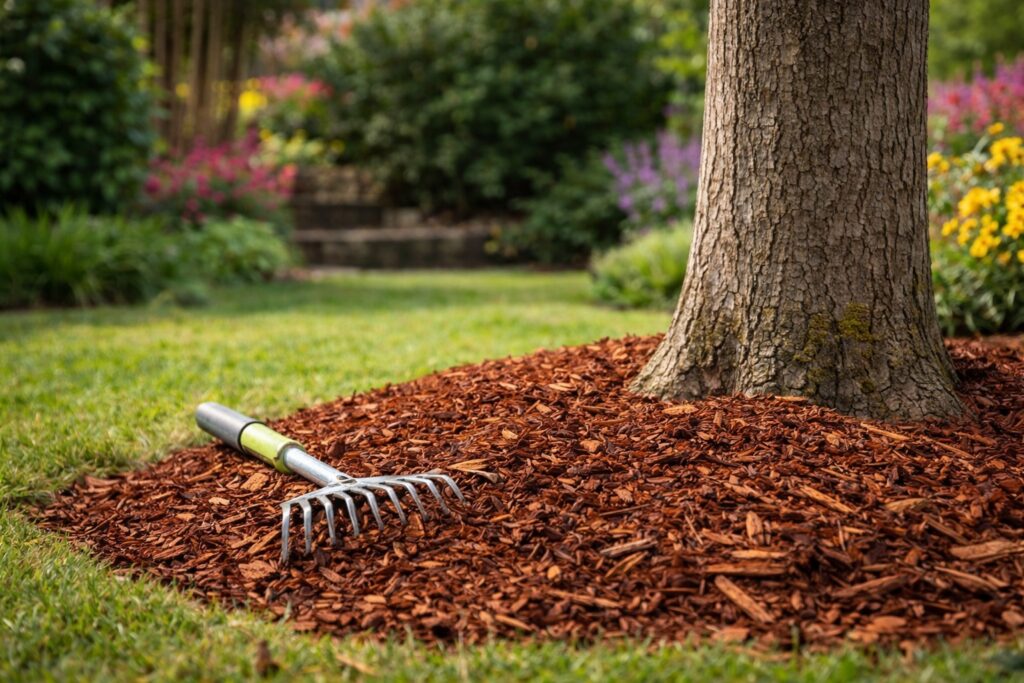
Spring in the Dallas-Fort Worth area brings fresh growth, warmer temperatures, and the urge to refresh landscapes with new mulch. Mulching is one of the best ways to protect trees and shrubs in North Texas. However, common mulching mistakes in Texas landscapes can quietly lead to severe root damage and long term decline.
In DFW, our dense clay soil already creates drainage challenges. When excessive mulch is added on top, moisture becomes trapped, oxygen levels drop, and roots begin to suffer. Over time, this environment encourages fungal diseases and root rot, especially during those wet spring storm seasons.
If you’re investing in your landscape’s health this season, understanding proper spring mulching in DFW is essential for root rot prevention in Texas clay soil.
Why Mulch Is Important for Texas Landscapes
When applied correctly, mulch offers powerful benefits for DFW landscapes and yards. It plays a critical role in
soil moisture solutions in North Texas, particularly in areas with intense heat and fluctuating rainfall.
Benefits of Proper Mulching
-
Regulates soil temperature during hot summers
-
Reduces evaporation and conserves water
-
Suppresses weed growth
-
Improves soil structure over time
-
Protects roots from compaction
In clay heavy soils, mulch helps buffer extreme moisture swings. During dry periods, it conserves water. During heavy rains, it softens surface impact and reduces crusting.
According to Texas A&M AgriLife Extension, organic mulches improve soil structure and enhance microbial activity when used properly.
The key phrase is when used properly. Excessive mulch thickness creates a moisture trap that North Texas clay soil cannot compensate for.
Understanding Texas Clay Soil in DFW
Dallas-Fort Worth soils are dominated by heavy clay, often referred to as Blackland Prairie clay. This soil type presents unique challenges.
Characteristics of Texas Clay Soil
-
Poor natural drainage
-
High water retention
-
Compacts easily
-
Expands when wet and contracts when dry
-
Slow oxygen movement to roots
Clay soil holds water longer than sandy soil. While this can be helpful during drought conditions, it becomes problematic when excess moisture accumulates.
When you combine clay soil with over mulching, you create a layered barrier that slows evaporation and restricts airflow. Roots require oxygen to function. Without it, they weaken, decay, and become susceptible to fungal pathogens.
The Texas A&M Forest Service also highlights the importance of proper soil moisture management in urban tree care.
If your property has experienced standing water after storms, you may already be dealing with clay related drainage issues.
What Is Root Rot and Why It Is So Common in North Texas
Root rot is a fungal disease that attacks root systems when soil remains overly saturated. In DFW, root rot prevention in Texas landscapes is a major concern because clay soils slow drainage naturally.
Common fungi associated with root rot include:
-
Phytophthora
-
Pythium
-
Armillaria
These pathogens thrive in moist, oxygen deprived environments. Over mulching trees in spring often creates ideal conditions for fungal growth.
Early Signs of Root Rot in DFW Landscapes
-
Yellowing leaves despite adequate watering
-
Wilting during warm afternoons
-
Sparse canopy growth
-
Soft, dark, or decaying roots
-
Fungal growth near the base of trees
Because symptoms often resemble drought stress, many homeowners respond by adding more water, which worsens the issue.
The Most Common Spring Mulching Mistakes in Texas
Many mulching mistakes in Texas landscapes happen with good intentions. Homeowners want a clean, refreshed look in spring. Unfortunately, common habits create long term damage.
1. Applying Mulch Too Thick
The ideal mulch depth is 2 to 3 inches. In DFW, we frequently see mulch piled 5 to 8 inches deep. This excessive thickness:
-
Restricts oxygen flow
-
Holds excessive moisture
-
Promotes fungal development
-
Encourages shallow root growth
Clay soil already retains moisture. Adding excessive mulch intensifies the problem.
2. Creating Mulch Volcanoes
Mulch piled against the trunk of a tree is known as a mulch volcano. This practice traps moisture against bark tissue, leading to:
-
Bark decay
-
Insect attraction
-
Fungal infection
-
Structural instability
Proper mulching requires keeping mulch several inches away from the trunk base.
Our
Tree Health Care Services in DFW include inspections for mulch volcano damage and root collar stress.
3. Mulching Too Early in Wet Spring Conditions
Spring rains in North Texas can be unpredictable. Applying fresh mulch during prolonged wet periods compounds soil saturation.
Instead, mulch should be applied when soil moisture is balanced, not when it is already waterlogged.
4. Re Mulching Without Removing Old Layers
Each year, new mulch is added without addressing compacted layers beneath. Over time, this creates a thick organic mat that:
-
Repels water initially
-
Traps moisture below
-
Limits oxygen exchange
Before refreshing mulch beds, older material should be evaluated and redistributed if necessary.
How Over Mulching Causes Root Rot in Texas Clay
To understand root rot prevention in Texas, you must understand what happens below the surface.
Oxygen Deprivation
Roots need oxygen to convert nutrients into energy. When clay soil remains saturated and covered with thick mulch, air pockets disappear.
Without oxygen:
-
Root cells begin to die
-
Beneficial microbes decline
-
Harmful fungi multiply
Excessive Moisture Retention
Clay soil expands when wet. Thick mulch prevents evaporation. This combination keeps soil saturated for extended periods.
Root rot fungi spread rapidly in these conditions, attacking weakened root tissue.
Surface Root Development
When mulch is too deep, feeder roots begin growing into the mulch layer rather than deeper soil. These shallow roots are vulnerable to:
-
Heat stress
-
Drought swings
-
Structural instability
Healthy trees in DFW need deep root systems to survive extreme summer heat. You can learn more about strengthening root systems through our
Soil and Root Health Programs.
Soil Moisture Solutions for North Texas Properties
Managing soil moisture is critical for preventing root rot in DFW landscapes.
Improve Drainage
-
Aerate compacted clay soil when appropriate
-
Redirect downspouts away from tree bases
-
Avoid overwatering irrigation systems
Monitor Irrigation Systems
Many properties water too frequently in spring. Automated systems often run on summer schedules even during rainy periods.
Adjust irrigation based on rainfall and soil moisture levels.
Use Proper Mulch Depth
Maintain a consistent 2 to 3 inch layer. Keep mulch flat and evenly distributed.
Conduct Soil Testing
Professional soil testing identifies drainage and nutrient imbalances that may contribute to root stress.
Seasonal Mulching Best Practices for DFW
Spring mulching in DFW should focus on balance rather than excess.
Step by Step Mulch Guidelines
-
Remove excess old mulch
-
Inspect the root flare area
-
Spread mulch evenly at proper depth
-
Maintain a clear gap around trunks
-
Monitor moisture throughout the season
Organic mulches such as hardwood chips break down slowly and improve clay structure over time when applied properly.
Avoid using excessively fine textured materials that compact easily.
When to Call a Professional in Dallas Fort Worth
Root rot often goes unnoticed until tree canopy symptoms appear. By that stage, significant root loss may already have occurred.
You should seek professional evaluation if:
-
Trees show yellowing despite adequate moisture
-
Soil remains soggy days after rainfall
-
Mushrooms appear near tree bases
-
Bark at the base feels soft or spongy
Our local team specializes in diagnosing root rot in DFW landscapes and implementing soil moisture solutions tailored to North Texas clay.
Long Term Impact of Over Mulching in Texas
Unchecked mulching mistakes in Texas landscapes can lead to:
-
Chronic tree stress
-
Reduced growth rates
-
Increased pest vulnerability
-
Structural instability
-
Premature tree decline
In North Texas, mature trees are valuable landscape assets that provide shade and cooling benefits during extreme heat. Protecting root systems ensures they continue to thrive for decades.
Protect Your DFW Landscape This Spring
Spring is an opportunity to refresh and protect your property, not unintentionally damage it. Proper mulching practices combined with effective soil moisture solutions can significantly reduce root rot risk in Texas clay soil.
If you are unsure whether your mulch depth or drainage conditions are contributing to stress, our team is ready to help. Schedule a
professional evaluation and take a proactive step toward long term landscape health.
Healthy roots support strong trees. With the right spring mulching approach, you can protect your investment and prevent costly root rot damage across your Dallas Fort Worth property.
Contact our local experts today to safeguard your landscape before summer heat intensifies existing moisture problems.