Setting the Stage for Year-End Tree Care
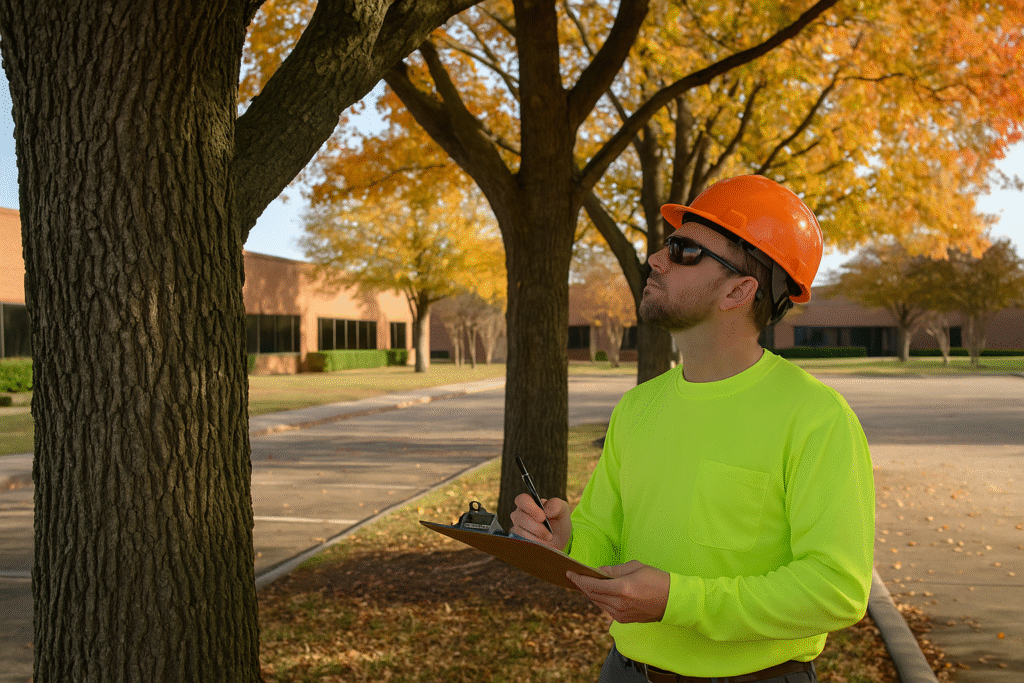
As the Texas growing season winds down, your trees have endured months of intense sun, dry spells, and sudden storms. While lawns often receive attention before winter, trees are frequently overlooked until a problem becomes impossible to ignore. Conducting a thorough tree health inspection as part of your end-of-year landscaping plan helps your property enter winter safely and emerge stronger in spring.
Whether you manage a commercial site, HOA, or school campus, an end-of-year tree review can help prevent disease outbreaks, storm damage, or costly losses later. It’s a proactive way to protect your landscape investment and support the beauty, safety, and sustainability of your outdoor spaces for years to come.
Why End-of-Year Tree Health Inspections Matter
Trees are resilient, but they’re not invincible. Over time, stress from drought, compacted soil, pests, or nutrient imbalance can weaken their structure. By the end of the year, small issues often hide beneath leaves or bark, waiting to become major hazards.
A professional tree health inspection evaluates key indicators of tree condition, from canopy health to root zone performance, providing a clear understanding of tree vitality before the dormant season. This timing is ideal because trees redirect energy away from new growth and toward strengthening their root systems, making symptoms easier to spot and treatment planning more effective.
Benefits of scheduling a year-end inspection include:
-
Early detection of decay or disease that could progress during dormancy
-
Identification of weak limbs that could fail during winter storms
-
Improved soil and irrigation insight to correct underlying nutrient or moisture problems
-
Reduced risk of costly emergency services later in the season
An annual inspection helps ensure treatments can be scheduled efficiently, supporting a healthier landscape before severe weather arrives.
What to Include in Your Year-End Tree Service Checklist
Your tree service checklist should be both practical and comprehensive. It’s not just about spotting visible damage; it’s about understanding the tree’s overall health, environment, and future needs.
1. Inspect for Structural Damage
Walk your property and visually inspect each tree. Look for cracks or splits in the trunk, broken branches from recent storms, or trees leaning at unusual angles. In North Texas, where clay soil can loosen after heavy rain, root upheaval is especially common. A certified arborist can determine whether the root plate remains stable or if risk-reduction strategies such as cabling or bracing are recommended.
Structural evaluations are especially important in commercial settings such as apartment complexes, school grounds, and church campuses where public safety is a priority.
2. Check for Pest and Disease Activity
Even during cooler months, pests and pathogens can linger. Warning signs include small boreholes in bark, discoloration, or areas of sap oozing. Common North Texas threats such as oak wilt, canker disease, and borers can spread quickly if not identified early.
Detailed bark and canopy evaluations allow arborists to diagnose problems and apply targeted treatments before dormancy.
3. Evaluate Soil and Irrigation Systems
Healthy soil is the foundation of strong trees. Compacted or nutrient-depleted soil restricts root growth and reduces canopy density.
End-of-year evaluations should include soil testing for nutrient levels and pH balance, reviewing irrigation schedules for seasonal adjustment, and checking for drainage issues or standing water.
Mulch should be spread evenly and kept away from direct trunk contact to avoid moisture buildup and pest activity.
4. Support Canopy Health Without Cutting
Canopy improvement does not require trimming or removal. A professional inspection can identify dieback linked to root stress, leaf discoloration caused by nutrient deficiencies, and thinning areas associated with soil compaction or moisture imbalance.
Recommended solutions may include soil conditioning, deep-root feeding, moisture management, and targeted injections to support canopy density and long-term vigor.
5. Plan for Future Tree Care
A thorough inspection should always lead to a forward-looking plan. This may include scheduled fertilization, soil restoration programs, pest prevention strategies, and support plans for newly planted trees.
Many HOAs and commercial property managers use year-end reviews to set maintenance budgets, helping ensure consistent care rather than reactive responses.
Partnering With Certified Arborists for Reliable Results
While basic inspections can be done in-house, certified arborists provide advanced diagnostics using tools such as internal decay detection equipment, canopy health assessments, and laboratory soil analysis.
At Trees Hurt Too Inc., our ISA-certified team delivers detailed tree health inspections and customized maintenance plans designed for North Texas conditions.
Our services include:
-
Comprehensive health and risk assessments
-
Disease and pest management using environmentally responsible treatments
-
Soil restoration and deep-root feeding programs
-
Targeted tree injections for nutrient and stress support
Our goal is to support long-term tree health while helping keep properties safe and visually appealing year-round.
End-of-Year Landscaping for Long-Term Success
End-of-year landscaping is about more than appearance. It’s about protecting your investment through winter and positioning your property for success in spring.
Best practices include cleaning up fallen debris to reduce pest harborage, applying mulch correctly to regulate soil temperature, inspecting hardscape and drainage areas, and reviewing irrigation efficiency to prevent runoff or pooling near tree bases.
These steps help maintain balance across your entire landscape ecosystem.
Create a Proactive Tree Care Strategy
The end of the year is the ideal time to evaluate, prepare, and plan. Scheduling a professional tree health inspection now helps reduce risk, limit future expenses, and support healthier trees year after year.
Trees that receive consistent care are more resilient, experience fewer emergencies, and add lasting value to your property.
Secure your landscape’s health before winter.
Schedule a professional tree health inspection with Trees Hurt Too Inc. and prepare your property for a stronger, safer, and more vibrant new year.