
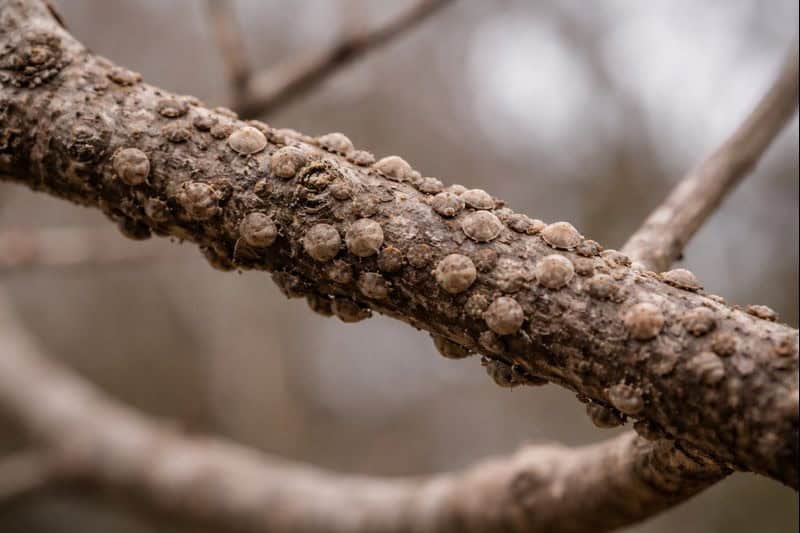
Late winter in North Texas often gives property owners a false sense of security. Trees appear quiet, shrubs show little growth, and insect activity seems minimal. Beneath the surface, however, scale insects are actively preparing for one of their most destructive periods of the year. Understanding why scale insects explode in late winter across Texas allows homeowners, HOAs, and commercial managers to intervene early and protect landscape health before spring damage becomes visible.
Scale insects are among the most persistent and damaging tree pests in early season landscapes. Their ability to survive winter conditions, combined with Texas weather patterns, makes February a critical window for prevention. Addressing scale insects early also helps reduce the risk of secondary problems such as fungal growth and long term plant stress.
Understanding Scale Insects in Texas Landscapes
Scale insects are small, sap feeding pests that attach themselves to stems, branches, and sometimes leaves. They are protected by a waxy or armored covering that makes them difficult to detect and resistant to surface treatments.
In Texas landscapes, scale insects commonly affect shade trees, ornamental shrubs, and foundation plantings. Once established, they drain vital nutrients, weaken plant defenses, and create conditions favorable for disease development.
For an overview of common shrub and tree pests in the region, visit our North Texas pest library page on Shrub and Tree Pests
Why Late Winter Creates the Perfect Conditions for Scale Insects
Several factors converge in late winter that allow scale populations to surge before spring growth begins.
Dormant Plant Defenses
During late winter, trees and shrubs operate at reduced metabolic levels. Sap flow is slower, and natural defense responses are less active. This allows scale insects to feed with minimal resistance.
Stable Shelter on Bark and Branches
Scale insects overwinter attached to bark, protected from cold snaps and wind. Unlike insects that rely on soil or leaf litter, scale remains firmly anchored throughout winter.
Temperature Fluctuations in Texas
North Texas winters often include extended warm periods. These temperature swings allow scale insects to remain metabolically active rather than fully dormant. When conditions are favorable, reproduction accelerates earlier than many expect.
Lack of Natural Predators
Beneficial insects that help control scale populations are less active in late winter. This imbalance allows scale numbers to increase without natural suppression.
Early Warning Signs of Scale Insect Activity
Detecting scale insects early is challenging but possible with careful observation.
Bumps or Crusty Growth on Bark
Scale insects often resemble small bumps or rough patches on branches and stems. These are frequently mistaken for natural bark texture.
Sticky Residue on Surfaces
As scale insects feed, they excrete a sugary substance known as honeydew. This sticky residue may appear on leaves, patios, vehicles, or nearby surfaces.
Sooty Mold Development
Honeydew accumulation creates ideal conditions for black sooty mold. While the mold itself does not infect plants, it blocks sunlight and signals an underlying pest problem. For more on fungal issues related to pest activity, read our blog post on how tree pests spread fungal diseases.
Declining Vigor Before Spring Growth
Trees and shrubs affected by scale may show delayed bud development, uneven leaf emergence, or thinning canopies once spring arrives.
The Connection Between Scale Insects and Texas Tree Fungus
Scale insects contribute indirectly to fungal problems across Texas landscapes. The stress caused by sap loss weakens plant immune responses, making tissues more susceptible to infection.
Additionally, honeydew buildup increases moisture retention on plant surfaces. This moist environment encourages fungal growth, particularly during late winter and early spring when humidity levels fluctuate.
For a deeper look at fungal risks during this time of year, visit our page on Texas Tree Fungus.
Why Early Season Scale Treatment in DFW Matters
Waiting until spring to address scale insects often limits control options. By the time new growth appears, scale populations may already be well established.
Early season scale treatment in the DFW area focuses on targeting insects before reproduction peaks. This timing reduces population size, limits plant stress, and minimizes the risk of secondary disease problems.
Benefits of Early Intervention
- Improved plant energy reserves for spring growth
- Reduced honeydew and mold development
- Lower overall pest pressure throughout the growing season
- Stronger resistance to environmental stress
Scale Insects Commonly Found in North Texas
Several species of scale insects are frequently observed in Texas landscapes.
Armored Scale
Armored scale insects are protected by a hard outer shell. They feed directly on plant cells and are often difficult to detect until damage becomes visible.
Soft Scale
Soft scale insects produce large amounts of honeydew and are closely associated with sooty mold problems. They tend to infest a wide range of trees and shrubs.
Bark Scale Variants
Certain bark scale species affect trunks and large branches, leading to long term structural stress if left unmanaged.
Understanding the specific type of scale present helps guide effective treatment strategies.
Environmental Factors That Worsen Scale Infestations
Late winter environmental conditions in Texas further contribute to scale outbreaks.
Excess Soil Moisture
Poor drainage weakens root systems, reducing a plant’s ability to tolerate pest pressure. Moisture related stress also increases susceptibility to fungal pathogens.
Nutrient Imbalances
Overstimulated growth from excess nutrients can attract sap feeding insects. Balanced soil nutrition supports healthier plant defenses.
Dense Planting Layouts
Limited airflow around shrubs and trees creates favorable microclimates for pests and disease.
For insights into managing moisture related stress, visit our Moisture Management page
How Professional Monitoring Stops Scale Early
Professional monitoring programs focus on identifying pest activity before visible damage occurs. Trained specialists recognize subtle signs such as crawler emergence timing and early feeding patterns.
Early detection allows for targeted treatment plans that protect beneficial insects and support overall landscape balance.
Long Term Strategies for Managing Tree Pests Early Season
Preventing scale insects requires more than a single treatment. An integrated approach supports long term plant health.
Supporting Soil Health
Healthy soil strengthens root systems and improves nutrient uptake, increasing resistance to pests and disease.
Managing Plant Stress
Reducing environmental stress helps plants allocate energy toward defense rather than survival.
Ongoing Seasonal Assessments
Regular inspections ensure pest populations remain below damaging thresholds throughout the year.
Trusted External Resources on Scale Insects
For additional research based information, consult these authoritative sources.
- Texas A and M AgriLife Extension publications on scale insects
- USDA Integrated Pest Management resources
These organizations provide science driven guidance on pest behavior and prevention.
Preparing Your Landscape Before Spring Arrives
Late winter is the most effective time to address scale insects in Texas landscapes. Early awareness, professional monitoring, and targeted intervention protect trees and shrubs before spring growth demands increase.
By understanding why scale insects explode in late winter and acting early, property owners reduce long term damage, support healthier growth, and prevent secondary fungal problems as the season progresses.
If your landscape includes valuable trees or ornamental shrubs, early season planning ensures they enter spring strong, resilient, and protected.