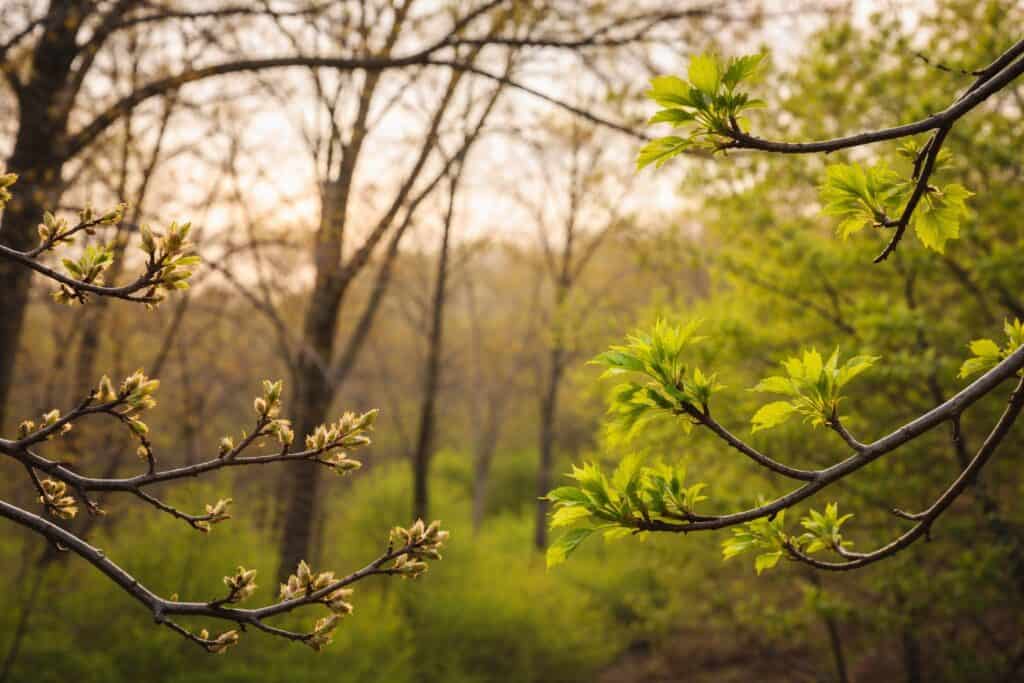
Spring in North Texas can feel absolutely unpredictable. One week your landscape looks bare and dormant, and the next your entire neighborhood is filled with vibrant green tree canopies. Yet many property owners notice something concerning during this seasonal transition. Some trees leaf out later than others. Some show uneven bud break. Others appear partially bare long after the surrounding trees have all filled in.
If you’ve searched for answers about late leaf out Texas trees or wondered why your trees are not leafing out in Texas when others are, you are not alone. Uneven leaf emergence is one of the most common early spring tree problems in Texas landscapes.
In this comprehensive guide, we will explain why some trees leaf out later, what uneven bud break really means, when to worry, and how to protect the long term health of your trees in North Texas.
Understanding Normal Leaf Emergence in North Texas Trees
Before assuming something is automatically wrong, it’s important to understand how leaf emergence works in our region. North Texas weather patterns are highly variable. Late cold snaps, sudden heat waves, drought cycles, and clay heavy soils all influence how and when trees break dormancy.
Different species naturally leaf out at different times. For example:
- Live oaks typically retain leaves through winter and shed old foliage as new growth emerges in early spring.
- Red oaks and cedar elms may leaf out slightly later than ornamental trees.
- Some native species wait until soil temperatures consistently rise before pushing buds.
If you are unsure about your tree species, reviewing our Live Oak Trees Guide can help you understand normal growth cycles specific to this common North Texas tree.
Uneven bud break can be completely normal in certain years, especially after fluctuating winter conditions. However, when large sections of a canopy remain bare while other sections leaf out, it’s a signal for distress.
Why Some Trees Leaf Out Later Than Others
When discussing why some trees leaf out later, it helps to consider environmental triggers. Trees rely on a combination of temperature, daylight length, and internal hormone signals to exit dormancy.
In North Texas, these triggers can become misaligned due to:
- Late season freezes after a warm February
- Extended drought during the previous summer
- Compacted clay soils limiting root oxygen
- Sudden temperature swings of 30 degrees or more
Trees that experienced stress the prior growing season often delay bud break. Their stored energy reserves may be lower, forcing the tree to conserve resources before committing to new leaf production.
If your property experienced insect pressure last year, you may also want to explore our Shrub & Tree Pests resource for species specific insights.
According to the Texas A&M Forest Service, environmental stress and weather variability are leading contributors to delayed spring growth in Texas trees.
What Uneven Bud Break Means
Uneven bud break occurs when certain branches leaf out while others remain dormant. This can create a patchy canopy with visible bare limbs.
In mild cases, uneven bud break simply reflects microclimate differences within the tree canopy. Branches exposed to more sunlight warm up faster and activate growth earlier. Interior or shaded limbs may follow weeks later.
However, pronounced uneven leaf emergence may indicate:
- Root stress or soil compaction
- Vascular disruption within specific limbs
- Winter injury to certain sections
- Early signs of disease
If large structural branches remain bare while surrounding growth appears healthy, further evaluation is recommended. Early spring tree problems in Texas can escalate quickly once temperatures rise.
You can learn more about tree health monitoring strategies in our commercial tree care services page.
Late Leaf Out in Live Oak Trees
Live oaks deserve special attention in North Texas landscapes. Many homeowners assume live oaks should look green year round. In reality, they undergo a seasonal leaf exchange in early spring.
Old leaves turn brown and drop rapidly, often creating the appearance of decline. Within weeks, new leaves emerge. However, stress factors can delay this process.
Late leaf out Texas trees frequently include live oaks affected by:
- Drought stress from the prior year
- Soil compaction around the root zone
- Construction activity within the drip line
- Fungal pathogens such as oak wilt
If your live oak appears partially bare while neighboring trees are fully leafed out, compare canopy density, leaf size, and uniformity. Small, sparse leaves may signal energy depletion rather than simple delay.
Trees Not Leafing Out in Texas: When to Be Concerned
It’s normal for some species to leaf out later, but if your trees are completely bare by mid to late spring, it can indicate more serious problems.
Here are warning signs to watch for:
- Brittle twigs that snap easily
- Bark splitting or peeling on major limbs
- No visible bud swelling by late April
- Sections of canopy that remain lifeless while others thrive
Scratch testing small twigs can reveal green tissue beneath the bark, indicating living tissue. Brown, dry tissue suggests dieback.
Common insect contributors to delayed leaf emergence include borers, scale insects, and defoliating caterpillars. These pests often weaken trees the previous season, resulting in sluggish spring growth.
Early Spring Tree Problems in Texas Climate
North Texas is well known for dramatic weather shifts. Trees that begin breaking dormancy during a warm spell may suffer damage when a sudden freeze follows.
Freeze injury can affect:
- Expanding buds
- Newly formed leaf tissue
- Vascular systems within young shoots
Damage may not be immediately visible to the eye. Weeks later, certain branches fail to leaf out due to internal tissue injury.
Clay soils further complicate recovery. Poor drainage restricts oxygen to roots, limiting nutrient uptake just when trees need it most.
The Role of Root Health in Leaf Emergence
Healthy roots drive healthy tree canopies. If roots are compromised, leaf development will be delayed or uneven.
Root stress commonly results from:
- Compacted soil from foot traffic or equipment
- Overwatering or poor drainage
- Drought conditions
- Grade changes around the trunk
When roots lack oxygen or adequate moisture balance, they cannot transport nutrients effectively. The tree responds by limiting new leaf production.
If you have recently completed construction or landscaping projects near mature trees, soil moisture solutions and monitoring leaf emergence patterns are especially important.
Pest and Disease Factors Affecting Bud Break
Shrub and tree pests are a frequent cause of uneven bud break in Texas landscapes. Insects that feed on vascular tissues disrupt nutrient flow, leading to partial canopy decline.
Common culprits in North Texas include:
- Aphids and scale insects
- Wood boring beetles
- Spider mites during dry springs
Fungal pathogens may also contribute to delayed leaf out. Root rot organisms thrive in poorly drained clay soils, silently reducing root mass until spring stress reveals canopy thinning..
Early detection is critical. Once temperatures rise above 85 degrees consistently, stressed trees struggle to recover.
Drought Legacy Effects on Spring Growth
One of the most overlooked causes of late leaf out Texas trees is prior year drought. Trees store carbohydrates during the growing season. These reserves fuel spring bud break.
When extended heat and drought reduce photosynthesis, stored energy becomes limited. The following spring, trees may:
- Leaf out later than normal
- Produce smaller leaves
- Exhibit sparse canopy density
- Experience branch dieback
North Texas drought cycles can create multi year stress patterns. Trees may appear to recover one season only to show delayed symptoms the next.
Proactive soil health management and deep root feeding strategies can help mitigate these impacts.
How to Support Trees Experiencing Uneven Leaf Emergence
If your trees are not leafing out in Tarrant County as expected, avoid panic reactions. Instead, focus on supportive care.
Key steps include:
- Evaluating soil moisture levels
- Reducing compaction in high traffic areas
- Monitoring for insect activity
- Scheduling professional tree health assessments
Don’t assume a tree is dead simply because it is slower than others. Many North Texas species operate on different biological timelines.
If concerns persist into late spring, consider requesting a professional evaluation through our tree health services page
When Professional Evaluation Is Essential
While mild uneven bud break can resolve naturally, the following scenarios require expert assessment:
- Large structural limbs remain bare after neighboring trees fully leaf out
- Significant canopy thinning compared to previous years
- Visible trunk damage or fungal growth
- History of pest infestation or disease on the property
Professional arborists evaluate root zones, canopy structure, pest presence, and soil conditions to determine the root cause.
Early diagnosis prevents further decline and protects long term landscape value.
Final Thoughts on Late Leaf Out in North Texas
Understanding why some trees leaf out later provides peace of mind during unpredictable Texas springs. In many cases, uneven bud break reflects environmental timing differences rather than serious decline.
However, consistent patterns of delayed growth, sparse foliage, or partial canopy failure should not be ignored. North Texas climate extremes, soil limitations, pest pressure, and drought history all influence spring leaf development.
By monitoring changes carefully and addressing stress factors early, property owners can protect the health, safety, and beauty of their trees for years to come.
If you are noticing early spring tree problems in Texas landscapes and want clarity about your specific situation, our team is available to evaluate tree vitality and recommend science based solutions tailored to North Texas conditions.
Healthy trees begin with informed care. Observing leaf emergence patterns each spring is one of the most valuable ways to understand what your landscape is telling you.